
AI is driving a flood of crypto bug reports. Now it’s helping sort them
Bug bounty platform HackerOne said it’s increasing its triage throughput with AI agents after a record quarter of reports in the third quarter.

Crypto bug bounty platforms have expanded their use of artificial intelligence to keep up with a growing mountain of AI-assisted security reports.
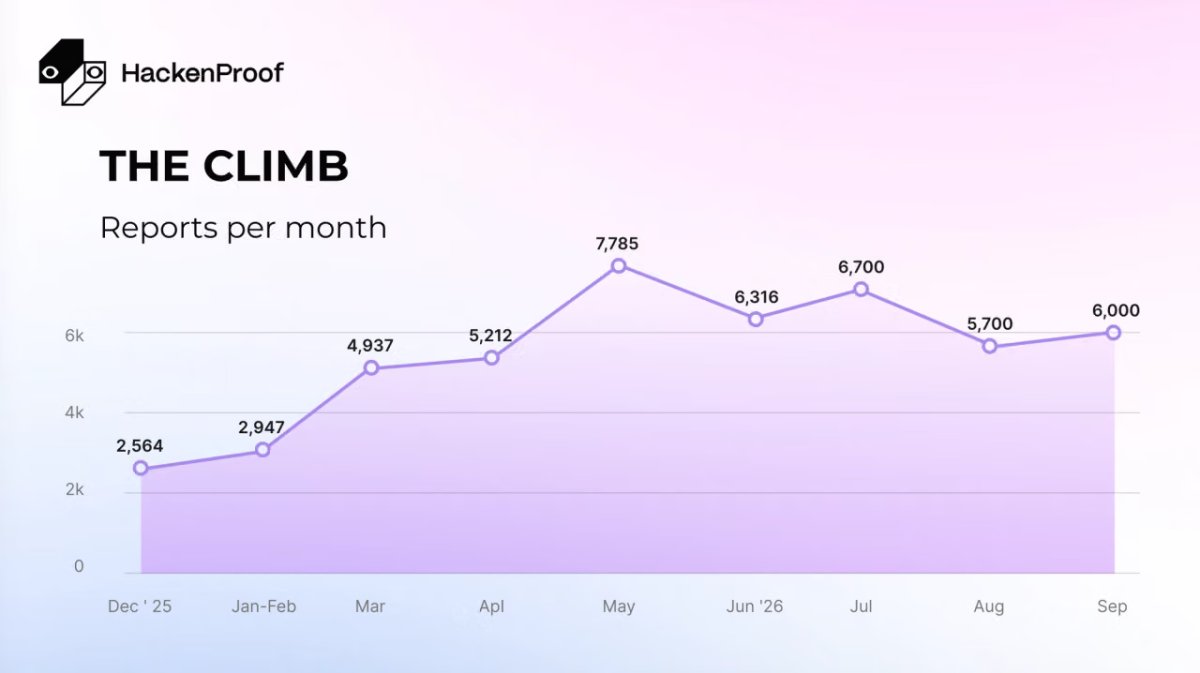
Crypto-focused HackenProof said in October that it was using AI to triage 70% of submissions fully autonomously, aiming to hit 85% by the end of 2026. It said it received an average of about 6,100 bug reports a month in the third quarter, 2.4 times the reports from December last year.
Rival Immunefi last week said submissions to its platform rose 136% year-over-year in the first nine months of 2026, as it introduced a tool that can flag duplicates before a researcher submits a report.
Bug bounty programs pay independent researchers to find and report potential security flaws. AI has helped researchers uncover more genuine vulnerabilities, but has also swelled the volume of invalid and duplicate submissions, making it harder for security teams to identify the threats that need urgent attention.
It’s like “bringing a sword to a gunfight,” Dmitry Tokarev, founder of crypto wallet provider Bron, told Cointelegraph, referring to security teams that haven’t already adopted AI to sift through reports.
Several bug bounty platforms have identified February as a turning point in the surge of AI-assisted vulnerability reports, coinciding with the release of more capable AI models, including Anthropic’s Claude Opus 4.6.
HackenProof said Claude Opus 4.6 could work through larger codebases and sustain tasks for longer. HackerOne said the arrival of more capable AI models and tools in that month saw a sudden shift from a “human-only submission environment.”
Some crypto developers are also experimenting with financial disincentives to curb low-quality submissions.
The team behind Firedancer, a Solana validator client developed by Jump Crypto, which also uses AI to screen reports, took an additional measure in October.
To deter spam, it began requiring researchers to burn 1 SOL for each bug report they want considered for a bounty. The token is permanently destroyed, even if the report turns out to be a duplicate.
In a November update published Tuesday, HackerOne’s vice president of operations Tony Lee said they began requiring researchers to verify their identities before submitting reports in the third quarter. It also expanded its triage team and began using AI agents to automatically close clear-cut cases, such as spam and duplicate reports.
In October, it gave customers more control over how many reports their public programs receive.