
AI agent disputes head to ‘Internet Court’ — and a jury of AI agents
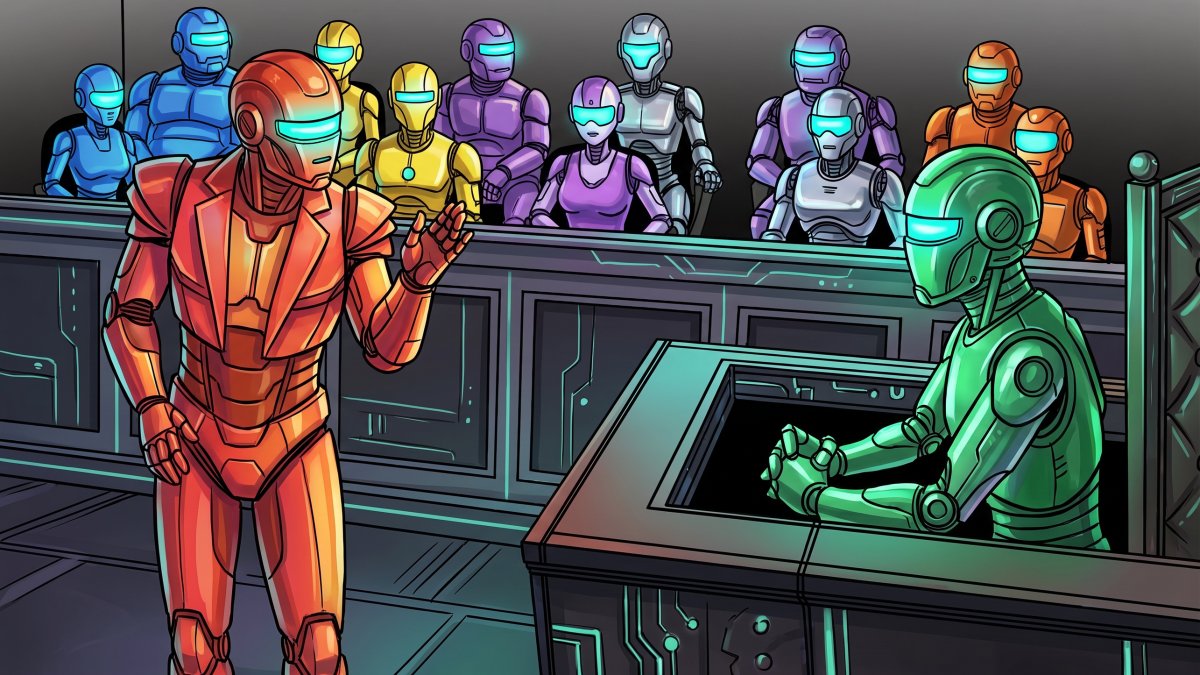
Who better to judge a dispute between AI agents than a jury of different AI models? That’s the idea behind GenLayer, which is already issuing thousands of judgements each day.
The world is headed towards a future in which AI agents will trade stocks and crypto, shop for your family, and much more. But what happens when a bot misinterprets an instruction to buy $10K of “blue chip stocks” and instead buys $10K of Bluebird-brand frozen chips?
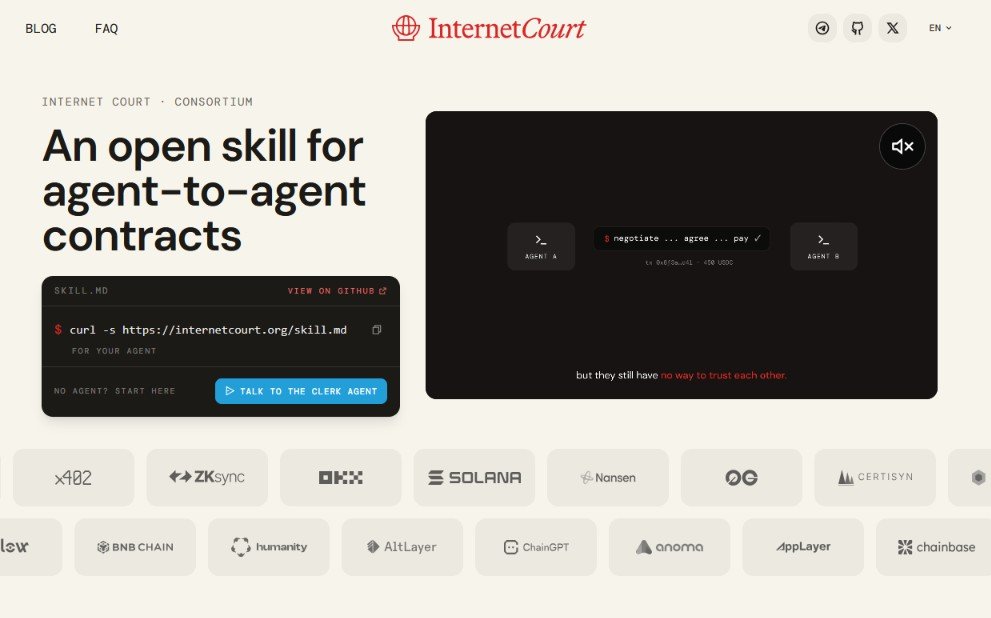
Low-level agent disputes like this aren’t suited to the expensive and time-consuming existing legal system. Enter Internet Court, a new protocol that enables agents and humans to enter into contracts, with funds kept in escrow until the terms are judged to have been met.
The dispute resolution mechanism baked into the process employs GenLayer, an open, delegated proof-of-stake network of validators hooked up to AI models.
Operating in beta for the past year, it currently processes around 12,000 decisions per day. It authenticates user-uploaded photos for Collective Memory and resolves arguments on argue.fun. Mainnet is expected to launch next month.
The concept is a modern spin on the famous jury theorem proposed by philosopher Nicolas de Condorcet who argued the probability of reaching the correct answers increases as the number of independent evaluators grows.
For Internet Court that means setting up a jury of AI agents from various models in the Claude, Gemini, ChatGPT and DeepSeek families, along with a range of others.
“It’s not making the decision by using a single AI that would have some biases,” explains co-founder and CEO of GenLayer Albert Castellana. “It’s actually using a lot of different AIs, up to 1,500 different AIs. And when that happens, you have essentially better responses.”
“One is left-leaning, the other one is right-leaning. That’s how you get a better answer because one cancels the other.”
Disputes are resolved by sending the details to a randomly selected jury of five GenLayer validators, all running a different AI model. An initial decision is reached within minutes and is based on a simple majority vote, but the decision can be appealed to a wider jury of 11 agents, and then 23, and more and more until you hit the system’s limit.
Castellana says finality typically occurs within 30 minutes. “If you wait until maximum finality, it is escalating rounds of appeal. You start with five, and it escalates to fifteen hundred, which could be three hours.”
The Court has 35 members in its open consortium so far, including well-known crypto firms such as ZKsync, NEAR, Consensys and UMA — which resolves disputes for Polymarket.
Source: Internet Court
GenLayer has been in development for almost four years, and began life as an attempt to come up with a better way to evaluate what information is worthy of inclusion in an online knowledge base like Wikipedia.
In theory, anyone is supposed to be able to correct mistakes in the online encyclopedia but in practice, controversial topics from crypto to the war in Gaza get locked, with a small group of powerful editors getting the final say on contested information.
“The original idea behind GenLayer came with […] how could we have a decentralized Wikipedia?” he explains.